Visit our other companies  ELEVATED ELECTRICAL | ELEVATED COMMERCIAL ROOFING
Visit our other companies ELEVATED ELECTRICAL | ELEVATED COMMERCIAL ROOFING
The Texas Department of Insurance recommends that your roofing contractor be present when your insurance adjustor arrives to inspect your home and roof. Insurance adjusters are often extremely busy after a major weather event, and may inadvertently miss or overlook an important aspect of your claim.

Once an adjuster has performed their inspection, they issue a proposal to the homeowner that should act as a guide for handling the claim. This is not a final settlement and in certain cases, it is necessary to resubmit a counter-proposal or call for a re-inspection if the type or scope of work differs significantly.
Your insurance company cannot cancel your policy or raise your rates for having to file a claim against your homeowner’s policy
Often, insurance carriers will ask you to get three estimates for roof repair or replacement. This is not necessarily in your best interest. Though there are certain contractors that can do work for less than the fair market price, often someone must cut corners somewhere to make a profit. The savings by accepting a lower than market value bid is not money that can be applied towards your deductible. The savings is passed on to the insurance company.
You do not have to have an estimate. It is your insurance company’s responsibility to send a licensed adjuster to you home to do an inspection.
We recommend that you have us come out and meet with your adjuster in case there is a disagreement on the damage or scope of work.
An insurance deductible may be defined as the amount you must pay upfront before the carriers pay you for the loss covered. Most insurance policies contain clauses pertaining to deductibles.
Elevated Roofing requires the insured to pay their deductible. We will install the highest quality roof system available. We stand by our word to serve our clients with excellence, and our integrity is not something we will negotiate.
The deductible is the co-pay or responsibility of the insured. Many times the insurance company’s loss statement refers to less deductible applied. This portion or amount of deductible is the agreed-upon amount between the insured and the insurance company that the homeowner pays to the contractor.
The replacement of damaged property is a shared expense between the homeowner and the insurance company. The insured’s annual premium is based upon the agreed upon out-of-pocket expense for the insured. Lower deductibles constitute higher annual premiums for the homeowner. Therefore, a lower annual premium would necessitate a higher deductible for each occurrence.
The responsibility to pay the deductible is the homeowners. The department of regulatory agencies states that it is illegal for the contractor to contribute to a homeowner’s deductible. However, many roofing companies contribute to the insured’s deductibles by using sign credits, discounts, and rebates. DORA defines this participation in partial payments as soft insurance fraud, and in most cases, it is overlooked.
 |  | GreenSky Financing & BTK Credit Financing |
Filing insurance claims can be a difficult and tedious task, especially if certain procedures are not followed. Most insurance companies want to properly service their clients’ claims, but it is still important to understand the proper procedures and exactly what questions to ask. We are experts in the insurance restoration process, and our staff is always eager to offer assistance and accurate information in the insurance claims process.
If you suspect wind or hail damage from a recent storm, you should call your insurance carrier’s claims office not your insurance agent.
For your convenience, we have provided the numbers to most of the larger insurance companies’ claims offices. Many agents are not responsible for or trained, in many cases, to handle the claims aspect of your policy. The first call should always be to the claims office after a roof inspector evaluates the roof for damage. If you choose Elevated Roofing as your contractor we will assist you in the process of gathering and providing information to your insurance company.
The claim handler from your insurance company will assign a claim number and a claims adjuster. Make a note of this number as it will be very important throughout the entire process. It may take several days to obtain the name and contact information of your adjuster. Remember to ask for his or her cell phone or direct contact number when you speak to them. Call your Elevated Roofing representative and provide the adjuster’s name, contact info, and appointment time. Your insurance company may ask you to get three estimates. This may result in your insurance company getting the lowest price, but you should know the insurance company keeps 100% of the savings. You will get a cheaper roof!
We will help you provide the proper information to the insurance carrier for a fair insurance settlement. With Elevated Roofing, you will get the highest quality roof system on the market.

Inform your adjuster that you will have your roofing contractor present at the meeting. It is critical that we attend the inspection meeting and serve as your advocate. As much as they appreciate your business, the insurance carriers seek to keep their expenditures down. Most adjusters will request the name of the roofer with whom they will be meeting because they realize the importance of having an experienced roofer by their side. Measurements of the roof and other damages will be taken at that time.
Whenever possible, Elevated Roofing will provide a satellite imaged, engineered report detailing the roof measurements. We do our job well so you can feel confident that you will be expertly represented during the initial inspection.
Once the insurance adjuster assesses the extent of damages, he or she will provide a claim summary detailing the scope of repairs or replacement. When you receive the adjuster’s claim summary we will compare it to our own to make sure nothing has been omitted from the scope of the project.
If there is a discrepancy, our insurance liaison will help by providing you with additional information so you are able to negotiate the difference with the insurance company. In most cases, this will be a simple process of faxing them our estimate and calling them to discuss the differences. If an insurance company is unwilling to fund key components of your new roof, we may ask you to call your provider to discuss the issue. If that happens, we will review our options and develop the best plan of action for your claim situation. Once the negotiation process has been completed, the insurance company will release a supplemental check to cover the additional amount that was determined through negotiations with the insurance representative.
You should receive the initial check about the same time the claim summary arrives. It may have your mortgage company’s name on it, in which case you would have to contact them to find out the proper procedure for getting their endorsement. Each company has specific directions to follow. There may be additional paperwork needed by the mortgage company. This process can take up to 10 days. If a supplemental check is issued, it too may have the mortgage company listed on it and the same procedures would need to be followed. Those funds would be payable towards the new negotiated roof replacement total.
The initial check may seem small compared to the full amount of the roof. There are two reasons for this 1. your deductible and 2. the depreciation. Most homeowners choose the Replacement Cost coverage type of policy over the Actual Cost Value policy. If you have a replacement cost policy we will recover (and receive) the depreciation withheld by the insurance company after the work has been completed. The deductible is the portion withheld by the insurance company that will not be paid out to you at any time. The deductible is your co-pay which you will pay directly to Elevated Roofing. The full cost of the roof replacement is the sum of the first insurance check, your deductible, the amount of depreciation, and any supplements.
Once the first insurance check, deductible and insurance loss statement are received the roof will be installed.
After the roof has been installed, our office will provide the necessary documentation to the insurance company to let them know it is complete. If the depreciation withheld was recoverable, we will ask for the release of those funds. The insurance company will most likely call you to confirm that the project is complete and will then release the last check. It is possible that if a supplement was negotiated that it may be included in the final check along with the depreciation. Our office will be happy to make the follow up calls to confirm receipt of this documentation on your behalf to ensure timely processing. Mortgage companies may require their own inspection before they endorse and release the depreciation back to you. We do not handle this detail, so be sure to ask them about their required procedures.
Once you receive your last insurance check, and mortgage company endorsements are made, we will collect the final amount due on the roof. As a courtesy to our clients we provide a 30-day grace period from roof installation to make the final payment on the depreciated amount.
We're here and ready to serve you with a free, no-obligation roof inspection. | Contact a Professional Roofer Today |
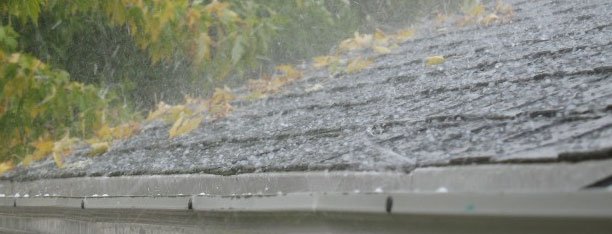
Hopefully you never have to file a claim for roof damage or replacement based on a catastrophic event. However, if it happens, simply follow Elevated Roofing’s Guide to Disaster Recovery.
Report your claim to your insurance company by calling the catastrophe claims number in your policy and obtain your claim number. An adjuster will be assigned to you. This adjuster will contact you within a few days to set an appointment to inspect your property damage in order to set an amount for the claim.
We consider ourselves to be your advocate and whenever needed, we like to be present at the time of the adjuster’s inspection and measurements. Please call to let us know when your adjuster will be there.
Prior to receiving your adjuster’s claim summary, we have the option of using an open ended, contingency contract. This is very similar to the type of contract real estate agents use. If your insurance provider does not find damages warranting replacement, your contract is null and void. There is no further obligation on your part. If the insurance company approves your roof replacement, we then have a binding agreement to install your roof. Important Note: The insurance company initially determines the scope and cost of the job, not the contractor.
You will be asked to sign an authorization form allowing us to speak with your insurance company regarding your claim. This will speed up the process and cut back on distracting phone calls in which you relay every message back and forth in a serious game of phone tag. This simple form can be faxed to your insurance company when filing the claim or later in the process. You will still be involved in the decision making process of course, but will not have to address every little detail.
Within several weeks, you will receive a breakdown from your insurance adjuster listing all the items on your home to be replaced and/or repaired; this is called an Adjuster’s Claim Summary. When you receive this Adjuster’s Claim Summary, fax a copy to our office so that we can review the data to ensure that an adequate settlement is reached. There may be details the adjuster has overlooked, depending on his or her level of experience. They are extremely busy after a storm, and many have little or no knowledge of roofing. The missing items will be noted. The insurance company will most likely fund these through supplements.
Insurance plans are written two different ways. They will usually be either Actual Cash Value Plans or Replacement Cost Coverage Plans. If you have an Actual Cash Value plan, you will receive one check around the same time of your Adjuster’s Claim Summary. This check will be the adjuster’s figure for replacing the roof based on his or her calculations, minus the depreciation for the age of the roof. A percentage of the replacement cost is withheld based on the amount of years left on the life of the shingles and minus the amount of your deductible. You will personally have to fund the amount of your deductible. There is no legal or ethical way around that. For example, let’s say you have chosen this type of policy and your $100,000 home has 20 year warranty on shingles that are 10 years old, with a 1% deductible. If the price of your new roof is $5,000, your insurance company will pay half of the replacement cost and withhold the amount of your deductible ($2,500 minus $1,000). The check you receive would be $1,500. You would be responsible for paying the other $3,500 out of pocket. If you have a Replacement Cost Value insurance policy instead, you would most likely receive your funding in two separate payments. You would still receive the same Actual Cash Value check with the adjuster’s claim summary. However, when the roof job is completed, you can request a second check from your insurance company for your Replacement Cost or what is sometimes referred to as Recoverable Depreciation. To keep our same scenario, if you had no other changes to the claim summary, this reimbursement check would be for $2,500, for the amount they withheld for the depreciation of the aging roof. You are still responsible for your deductible. The process for requesting this check is explained further down.
If the adjuster’s summary does not adequately cover the expense of a quality roof replacement, we will work with you and insurance to get what you deserve. This is when having a seasoned contractor who understands the insurance process is vital. This back and forth process may take 4-6 weeks, depending on availability of your adjuster. It is important to be patient during this process. The insurance companies have certain steps or layers of resistance they go through as a rule. By the end of the process, you are usually very successful in obtaining supplements to cover everything that is needed for a high quality roof. Many claims do need supplementing to provide a quality roof job, which is what you want as a homeowner.
Important Note: The checks from the insurance company are written to both you (the policy holder) and your lien holder (mortgage company if applicable). It must be endorsed by both parties and deposited in your account. It takes time for the mortgage company to endorse the check and return it to you, so do NOT hold on to this check. Send it off immediately to the lien holder for endorsement. We get paid by you personally, not the insurance company. The funds will need to be available in your account upon completion of the job.
Many banks hold insurance checks for up to 10 days before releasing funds. After you receive your check, it may take up to four weeks to actually have the funds available in your account. This is why we encourage you to not hold on to the checks, but to send them off immediately for endorsement.
Once an adequate price is determined (or immediately if the first check adequately funds the project from the beginning) and you have received and processed your first check from the insurance company, we will schedule your roof replacement. Once the job begins, it typically will take only a couple of days to provide you with a beautiful new roof that will last for years to come.
At the completion of the job, we will collect a personal check from you for the full amount of the roof replacement, which is the amount decided upon by the insurance company. You will most likely have received any supplement checks by then. We will give you a receipt for the total cost of the job. (The first insurance check + your deductible amount + any supplements agreed upon by the insurance company). If you have a Replacement Cost Value Policy, you will fax this receipt to the insurance company immediately in order to show them that the project has been completed, your deductible met, and that the funds have been spent as they were designated. Along with the receipt, request them to send your reimbursement check for your “recoverable depreciation”, or replacement cost value. Recoverable Depreciation correlates to the amount they discounted in the first actual cash value check for the depreciation for the life of the roof. (Remember our example above for a roof with 20 year shingles that has aged 10 years.) They will now issue another check for the balance of the job. If you do not fax the necessary items and request the depreciation check, they will not send another check. It is your responsibility to request it. This two-step process is an effective method used by insurance companies to make sure the work they pay for is actually completed. It takes more time, but serves a valid purpose overall.
To summarize, you will be paying for your roof job upon completion with a personal check. If you have a Replacement Cost Value Policy (also known as a Recoverable Depreciation Policy) the only out of pocket expense you will ultimately have at the end of your project is your deductible. The insurance company reimburses you for the full amount of the roof job, except the deductible you agreed to when you set your policy. If you have an Actual Cash Value Policy, you will receive a percentage of the replacement cost (depending on how much your roof has aged) less your deductible.
This can be a very confusing process, especially if it is your first claim, but we can help you along the way to make sure your interests are not overlooked by your insurance company or an overworked, well-meaning adjuster.
Read over your policy to make sure you have an RCV policy (one with Recoverable Depreciation.) Otherwise, you may be personally responsible to fund a large portion of your project. The only out of pocket expense you should incur is the deductible you set. Attempting to avoid paying your deductible by submitting inflated prices from a contractor or keeping the insurance money without using it as designated is not only unethical but can constitute insurance fraud, which is a felony. The system works better for everyone when proper procedures are followed. Make sure to set a reasonable deductible.
| Allied – 800-282-1446 | Auto Owners – 888-CLAIM-AO Encompass – 800-588-7400 Farmers – 800-435-776 Hartford – 800-243-5860 Liberty Mutual – 800-2CLAIMS | Nationwide – 800-421-3535 Safeco – 800-332-3226 State Farm – 800-SF-CLAIM Travelers – 800-CLAIM33 USAA – 800-531-8222 |